
Vintage Watch Care & Maintenance Watch Guide

The Omega Caliber 861 — one of the most celebrated vintage movements ever made, powering the Speedmaster Moonwatch through the Apollo era and beyond.
Vintage Watch Care & Maintenance Guide
Whether you’ve just purchased your first vintage watch or you’re a seasoned collector, proper care and maintenance is essential to protecting your investment. Mechanical watches — both manual-wind and automatic — are precision instruments that reward attentive ownership. This guide covers everything you need to know: from daily winding and time-setting to cleaning, storage, water resistance, and knowing when to send your watch in for service.
At Experts Watches, every timepiece we sell goes through our Certified Pre-Owned Program — inspected, timed, and authenticated in-house. If your watch needs service or repair, contact our team — we’re here to help.
📋 Table of Contents
- Overview
- Setting the Time
- Winding & Overwinding
- Automatic Winding
- Changing Day & Date
- Setting Time Backward
- Chronograph Use
- Screw Crown & Pushers
- Water Resistance
- Cleaning Your Watch
- Crystal Types & Care
- Magnetism
- Shocks & Impact
- Temperature
- Storage & Tribology
- Servicing Your Watch
- Landeron Cal. 48 Operation
- Valjoux 72C Operation
- Valjoux 88 Operation
- FAQ
🔍 Overview: Why Watch Care Matters
Mechanical watches are among the most complex objects ever made by hand. Unlike quartz watches, they rely entirely on precisely fitted mechanical components — springs, gears, levers, and jewels — that require periodic lubrication, adjustment, and care. A well-maintained mechanical watch can last generations; a neglected one can fail within years.
Vintage watches deserve extra attention. They were built to high standards, but their lubricants have aged, their gaskets have hardened, and their tolerances may have shifted over decades of use. The tips in this guide apply to all mechanical watches, with specific notes for vintage pieces where extra care is needed.
🔧 Our Watch Service Includes:
- Complete disassembly, cleaning with specialized solvents, and full inspection
- Proper lubrication with highest-grade oils and greases during reassembly
- Thorough accuracy testing over 24–72 hours
- Water resistance testing, gasket replacement, and regulation
- Case back marked and dated by our watchmaker
Note: Not all steps are available for every vintage watch due to parts availability. Factory service includes additional steps. Contact us to discuss your watch’s service needs.
⏱️ Setting the Time
Pull the crown gently when setting the time or date — never force it. Turn the hands in a clockwise direction whenever possible. On vintage watches, avoid setting the time counterclockwise unless you are specifically adjusting the date. Some watches have a screw-down crown — particularly sport and dive watches — which must be unscrewed before setting and screwed back down firmly afterward.
If your watch appears to have two crowns, identify each function before pulling either one. The crown used for winding is also used for setting the time. A second crown may control an alarm, inner bezel, or other complication — pulling the wrong one can cause damage.

Diagram showing correct crown positions for setting time and date on a mechanical watch.
🔄 Winding & Overwinding
Wind your watch by turning the crown clockwise with your thumb and forefinger. The crown will spin freely in both directions in time-setting mode but will only wind in one direction in winding mode. Begin slowly until you feel resistance — then stop. Never force the crown.
Most modern watches have a mechanism that prevents overwinding by allowing the mainspring to slip inside the barrel once fully wound. However, vintage watches may not have this protection. The golden rule: wind gently, stop at resistance, and never force it. If the crown becomes noticeably stiffer or harder to turn even when unwound, that is a sign the watch is due for service.
⚙️ Automatic Winding
Automatic (self-winding) watches wind themselves through the motion of your wrist via a rotor. If the watch has been sitting unworn, it may need to be manually wound or given a good shake before wearing. Move the watch up and down at least 30 times with a smooth motion before putting it on.
Do not swing or rapidly shake a bumper automatic. Bumper automatics (common in 1940s–1950s watches) use a different rotor mechanism that can be damaged by aggressive movement. Most automatics can also be manually wound via the crown — do this gently before wearing if the watch has been stored.
📅 Changing the Day & Date
Many vintage watches offer a “quick set” date function — pulling the crown to the first position and turning it advances the date or day directly. Others require advancing the hour hand through a full 24-hour cycle to change the date by one day.
The same rule applies to day indicators. Some watches — notably certain Ulysse Nardin models — are engineered to be immune to this effect, but they are the exception. When in doubt, follow the rule.
↩️ Setting Time Backward
Avoid adjusting the time counterclockwise on any watch with calendar functions. Running the hands backward can disengage the date mechanism or damage the calendar gearing. Always advance the time forward to the correct position. If you overshoot, keep going forward rather than reversing.
⏱️ Chronograph Use
On a standard two-pusher chronograph, the pusher above the crown starts and stops the chronograph, and the pusher below the crown resets it to zero. Only reset the chronograph when it is fully stopped — resetting while running can damage the reset mechanism on most vintage movements.
The exception is a flyback chronograph, which is specifically designed to reset and restart instantly with a single press while running. Do not attempt to use a standard chronograph as a flyback.
On a monopusher chronograph (one pusher), the sequence is: first press starts, second press stops, third press resets. These cannot measure interrupted time spans but are prized for their elegant simplicity. Browse our vintage chronograph collection.
🔐 Screw Crown & Pushers
Always confirm that a screw-down crown is fully tightened after setting the time or date. The same applies to screw-down pushers on chronographs. This is one of the most common causes of water damage in dive watches — a crown left unscrewed allows water to enter the case and begin oxidizing the movement. Over time, this can destroy the watch entirely.
Make it a habit: after every time-setting, check the crown. On dive watches, give it an extra half-turn to confirm it’s seated. Browse our vintage dive watch collection.
💧 Water Resistance
Water resistance ratings indicate the static pressure a watch can withstand — not the depth to which it can be safely worn. A 30m rating does not mean the watch can be submerged to 30 metres; it means it can withstand 3 atmospheres of static pressure. Dynamic pressure from swimming, diving, or even a sharp wrist movement significantly exceeds static ratings.

Water resistance rating chart — browse our vintage dive watch collection.
Additional factors that affect water resistance: age and condition of gaskets, crown condition, temperature of the water (hot tubs and steam rooms are particularly damaging), presence of chemicals (chlorine), and rapid pressure changes from jumping into water. Always pressure-test before any water exposure.
🧹 Cleaning Your Watch
Never use chemical cleaners, solvents, or abrasive cloths on your watch. Use a soft, damp cotton cloth to gently wipe the case and bracelet. Know the material of your case before cleaning — gold-plated cases are particularly sensitive and can be damaged by aggressive cleaning or polishing cloths.
- Use a soft microfiber or eyeglass cloth for the crystal and case
- For bracelets, a soft toothbrush with warm water can clean between links — only if the watch is water-resistant and the crown is screwed down
- Pay attention to the case back — dirt and moisture can accumulate around the seal
- If water gets inside the watch, take it to a watchmaker immediately — do not wait
- Test any cloth or cleaning method on a small, inconspicuous area first
- Never use ultrasonic cleaners on a watch with the movement inside
For a thorough clean, the best approach is a professional service. Our watchmakers clean every component individually during a full service. Contact us to arrange a service.

Professional watch service and repair at Experts Watches — contact us to get started.
🔭 Crystal Types & Care
The crystal is your watch’s first line of defense. A cracked or broken crystal should be replaced immediately — it compromises water resistance and allows dust and moisture into the case. Fogging under the crystal is a warning sign of moisture ingress — take the watch to a watchmaker right away.
Acrylic (Plastic)
The most forgiving crystal. Scratches can be buffed out by an experienced jeweler. Common on vintage watches from the 1950s–1980s. Prone to scratching but easy to replace.
Mineral Glass
Harder than acrylic; more scratch-resistant. Cannot be buffed. Scratches require replacement. Tougher than sapphire but less clear.
Hardlex / Coated
Seiko’s proprietary hardened mineral glass. More scratch-resistant than standard mineral. Cannot be buffed. Replacement required for deep scratches.
Sapphire Crystal
The clearest and most scratch-resistant crystal. Cannot be buffed. Extremely hard (9 on Mohs scale) but brittle — shatters under sharp impact. Standard on modern luxury watches.
🧲 Magnetism
If your watch is suddenly running significantly fast or slow — sometimes by several minutes per day — it may have become magnetized. This is one of the most common causes of timekeeping issues in vintage watches and is easily fixed.
Common sources of magnetism: smartphones, laptop speakers, magnetic bag clasps, refrigerator doors, and MRI machines. The hairspring in a mechanical movement is particularly susceptible — once magnetized, its coils can stick together, dramatically affecting rate.
The fix is simple: a watchmaker can demagnetize your watch in seconds using a degausser. Some brands — notably IWC with their Ingenieur line and Omega with their Master Co-Axial movements — build watches with soft iron inner cases to deflect magnetic fields. Browse our Omega collection.
💥 Shocks & Impact
Avoid wearing your vintage watch during activities that involve vibration or impact — hammering, power tools, tennis, golf, or squash. These activities can flatten pivots, overbank the balance wheel, or bend and break delicate components. Vintage watches from the 1950s were built to lower shock-resistance standards than modern watches.
If your watch stops or runs erratically after an impact, do not shake it, bang it, or try to restart it by winding. Take it to a watchmaker immediately — further agitation can cause additional damage to already-displaced components.
🌡️ Temperature
Extreme temperatures affect lubricant viscosity and the dimensional tolerances of metal components. Avoid leaving your watch in a hot car, in direct sunlight for extended periods, or in a sauna or steam room.
Hot tubs and steaming showers are particularly dangerous even for water-resistant watches — the rapid thermal expansion and contraction of the case, crystal, and gaskets can open microscopic gaps that allow moisture to enter. A watch rated 5 ATM can fail in a hot tub even if it would survive the same depth in cold water.
Cold temperatures slow the movement and thicken lubricants. Vintage watches stored in cold environments should be allowed to warm to room temperature before winding or wearing.
📦 Storage & Tribology
Store your watch face-up, never on its side. When storing for extended periods, keep the watch in a cool, dry place away from direct sunlight, magnetic fields, and humidity.
The most important storage principle: run your watch regularly. Lubricating oils in a mechanical movement can congeal, separate, or evaporate if the watch sits unworn for months or years. Think of it like house paint — keep it moving and it stays fluid; leave it still too long and it skins over. Even winding and running a stored watch for a few hours every month helps keep the lubricants distributed.
For collectors rotating between multiple watches, a quality watch winder set to the correct rotations-per-day (RPD) for your specific movement is a worthwhile investment. Browse our watch accessories including straps and storage solutions.

Our watchmakers handle everything from routine service to complex vintage repairs. Contact us to discuss your watch.
🔧 Servicing Your Watch
Most mechanical watches should be serviced every 3 to 5 years. Some well-built modern movements can run longer between services, but vintage watches — with aged lubricants and worn components — often benefit from more frequent attention. Signs your watch needs service:
- Running significantly fast or slow (more than ±30 seconds per day)
- Stopping unexpectedly despite being wound
- Crown feels stiff or gritty when winding
- Moisture or fogging under the crystal
- Chronograph or other complications not functioning correctly
- Watch stops after impact
- More than 5 years since last service
🔧 Experts Watches Service & Repair
Our in-house watchmakers service and repair vintage and luxury watches of all brands and complications. We specialize in vintage Swiss movements including Valjoux, Lemania, Landeron, Venus, and Omega calibers.
- Full movement service: disassembly, ultrasonic cleaning, lubrication, regulation
- Chronograph service and calibration
- Crystal replacement (acrylic, mineral, sapphire)
- Crown and stem replacement
- Gasket replacement and pressure testing
- Case and bracelet cleaning and polishing
- Demagnetization
⚙️ Landeron Calibre 48 Family — Chronograph Operation
The Landeron Cal. 48 family is one of the most common vintage Swiss chronograph movements, found in watches from the 1940s through the 1960s. Unlike most two-pusher chronographs, the Cal. 48 uses an unconventional pusher layout:
- 2:00 pusher — Start
- 4:00 pusher — Stop / Reset
This means the stop and reset functions share the same pusher — the opposite of the standard layout. The later Cal. 149, Cal. 189, and Cal. 349 returned to the conventional start/stop at 2:00 layout. Always identify your specific caliber before operating the chronograph on a Landeron-equipped watch.
⚙️ Valjoux 72C — Usage Instructions
The Valjoux 72C is a more complex version of the legendary Valjoux 72 — one of the most celebrated vintage chronograph movements ever made, used in the vintage Rolex Daytona, Patek Philippe Calibre 12, Heuer Carrera, and many others. The 72C adds a full calendar complication (day, date, month) to the base chronograph.

Valjoux 72C setting diagram — browse our Valjoux chronograph collection.
⚙️ Valjoux 88 — Usage Instructions
The Valjoux 88 is one of the most iconic vintage triple-complication movements, combining a chronograph with a full calendar and moon phase display. It requires careful attention when setting the moon phase complication.

Valjoux 88 setting diagram — browse our Valjoux chronograph collection.
❓ Frequently Asked Questions
How often should I service my vintage watch?
Every 3 to 5 years is the standard recommendation for mechanical watches. Vintage watches with aged lubricants may benefit from more frequent service. If your watch is running more than ±30 seconds per day off, it’s time for a service. Contact us to discuss your watch.
Can I wear my vintage watch in the shower or swimming?
No — unless the watch has been recently pressure-tested and confirmed water-resistant. Vintage gaskets harden with age and no longer provide the original water resistance. Even a watch originally rated 50m or 100m may offer zero protection today without a current pressure test.
My watch is running fast suddenly — what happened?
Sudden changes in rate — especially running significantly fast — are the most common symptom of magnetization. Keep your watch away from smartphones, laptop speakers, and magnetic bag clasps. A watchmaker can demagnetize it in seconds with a degausser.
Can I overwind a vintage watch?
Yes — unlike most modern watches, some vintage movements do not have a mainspring slip mechanism. Wind gently, stop when you feel resistance, and never force the crown. If the crown feels unusually stiff, the watch likely needs service rather than more winding.
What strap should I use on my vintage watch?
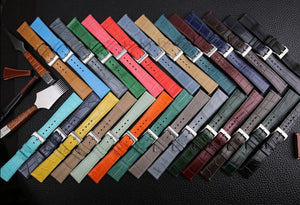
The right strap depends on the watch style, lug width, and your intended use. Leather straps are classic for dress watches; NATO and nylon straps are practical for sport and field watches; metal bracelets are ideal for dive and sport watches. Browse our strap and bracelet collection — we carry options for most vintage lug widths.
Do you buy, sell, or trade vintage watches?
Yes — Experts Watches buys, sells, and trades vintage and luxury watches. Every watch we sell goes through our Certified Pre-Owned Program. If you’re looking to sell or trade, visit our sell or trade page or contact us directly.
🛍️ Shop & Services at Experts Watches
• Vintage Watches — curated, authenticated, and serviced in-house
• Chronograph Watches — Valjoux, Lemania, Landeron, and more
• Dive Watches — tested and pressure-rated vintage divers
• Watch Straps & Bracelets — leather, NATO, metal, and more
• Certified Pre-Owned Program — every watch inspected and authenticated
• Sell or Trade Your Watch — fair appraisals from our expert team
• Watch Service & Repair — in-house watchmakers for vintage and luxury pieces

Every watch at Experts Watches is covered by our Certified Pre-Owned Program — inspected, timed, and authenticated in-house.
📚 Related Guides at Experts Watches:
• Watch Complications & Functions Guide — every complication explained, from chronograph to tourbillon.
• Watch Movements That Changed The World — the iconic calibres behind the greatest watches ever made.
• Watch Case & Bracelet Metal Codes Guide — decode Omega and Rolex material codes.
• Omega Bracelet Reference Numbers Guide — match the correct bracelet to your Omega.
• Rolex Serial Number Lookup — date your Rolex by serial number.
• Tudor Serial Number Lookup — date your Tudor by serial number.
• Certified Pre-Owned Program — every watch inspected, timed, and authenticated in-house.

Browse our full collection of vintage and luxury watches — authenticated, serviced, and priced for serious collectors.
Watch Gallery
Connecting Collectors with Iconic Timepieces Since 2000

Our collections


Testimonials
Could Not Ask For Better Service! Shipping was unbelievably quick! Awesomeness at its finest!
Highly Recommend!! I'm over satisfied! ExpertsWatches is awesome! So legit!
Very professional! Holy Crap that was fast!👍🏽🤣👍🏽
Michael I.
JAEGER LeCOULTRE Master Compressor Titanium Diving PROGeographic GMT
Our Latest Thoughts

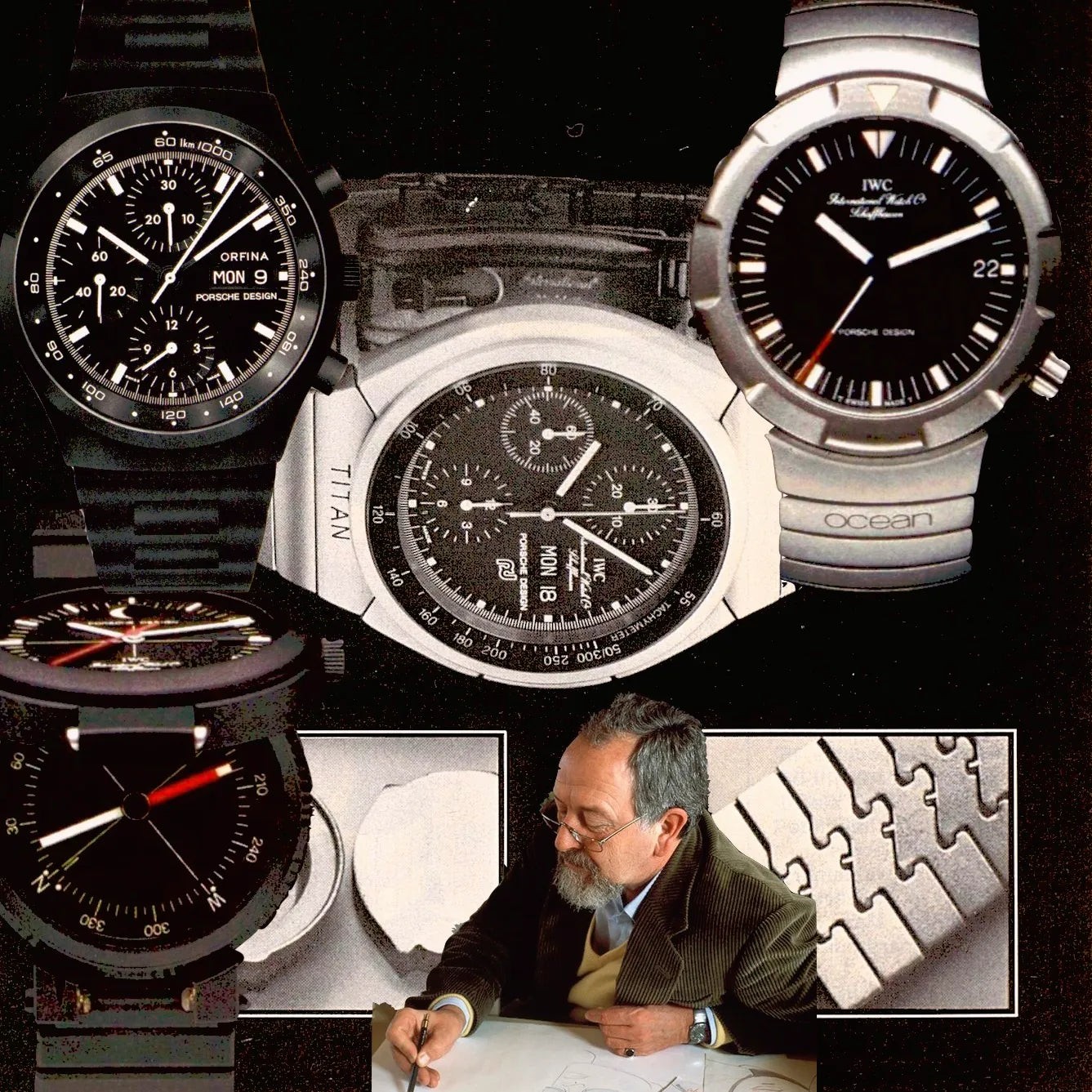
IWC, Porsche Design, and Titanium Watches
Read more

The Ultimate Guide To Buying Vintage Watches For Investment
Read more

Winners of the 2025 GPHG Watch Awards
Read more