
The Amelia Earhart Watch

Amelia Earhart (July 24, 1897 — missing July 2, 1937)
✈️ The Amelia Earhart Watch — History, Provenance & the Longines Chronograph
Few watches carry a provenance as remarkable as the Longines mono-pusher chronograph worn by Amelia Earhart on both of her trans-Atlantic flights. This is the story of that watch — from the cockpit of the 1928 Fokker Trimotor Friendship to the International Space Station, and the chain of remarkable individuals who carried it through history.
📋 Table of Contents

Amelia Earhart in her plane, wearing her Longines mono-pusher chronograph.
📍 Amelia Earhart
Amelia Earhart was one of the most celebrated aviators of the 20th century. She was the first woman to fly as a passenger across the Atlantic Ocean, and later became the first woman to pilot a plane across that same ocean in a solo flight. She was also a charter member and the first president of The Ninety-Nines, an international organization of licensed women pilots.
Earhart disappeared on July 2, 1937, during an attempted circumnavigation of the globe. She has never been found.
⌚ The Watch

Front of Amelia Earhart’s Longines Mono-Pusher Chronograph.

Back of the watch, bearing the inscription: “This watch was worn by Amelia Earhart on her two transatlantic flights and presented by her to H.G.S.Jr just before her death.”
Earhart wore her Longines Chronograph during both of her trans-Atlantic flights — one as a passenger and one as a solo flight, according to Joan Kerwin, director of The Ninety-Nines and member for 39 years. The watch is a Longines Mono-Pusher Chronograph with two registers.
🏢 The Selfridge Connection
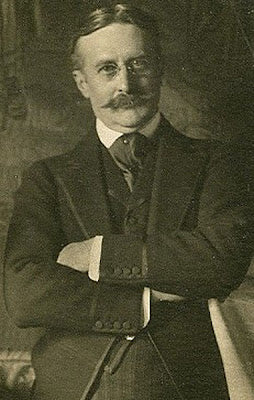
Note: This photograph is of Harry Gordon Selfridge Sr., father of H. Gordon Selfridge Jr. (H.G.S.Jr), to whom Earhart presented the watch.
The “H.G.S.Jr” in the inscription refers to H. Gordon Selfridge Jr., owner of the famed London department store. Selfridge met Earhart in London after her 1932 crossing, when she realized she would need appropriate clothing for public appearances. She quickly earned both the friendship and enormous admiration of Selfridge, which led to him giving her a special watch — the one she was wearing on her presumed-fatal final flight.
In return, Earhart gave Selfridge the watch she had worn on both her previous Atlantic crossings. Selfridge’s account of this exchange is detailed in George Palmer Putnam’s book Soaring Wings.
✈️ The Ninety-Nines

Earhart was a charter member and the first president of The Ninety-Nines, an international organization of licensed women pilots from 35 countries with more than 5,500 members worldwide. The group was founded in 1929 and promotes the advancement of aviation among female pilots. Nearly all women of achievement in aviation are past or current members.
The watch was given by Selfridge to Fay Gillis Wells, a charter member of The Ninety-Nines. According to Wells: “Gordon Selfridge gave me the watch when we were working on the Amelia Earhart Commemorative Stamp ceremony in 1963.” Wells kept the watch in her Washington, D.C., apartment until she needed funds for the Forest of Friendship — a memorial in Earhart’s hometown of Atchison, Kansas. The watch was auctioned off, and purchased by Joan Kerwin, director of The Ninety-Nines.
🚀 The Watch Goes to Space
Astronaut Shannon Walker — herself a member of The Ninety-Nines — flew the watch to the International Space Station aboard the Soyuz TMA-19 spacecraft in June 2010. The watch arrived on June 17, 2010, exactly 82 years to the day after Earhart’s first trans-Atlantic flight.
After its return from space, the watch was placed on display at The Ninety-Nines Museum of Women Pilots in Oklahoma City.
⏱️ About Mono-Pusher Chronographs

A vintage Longines Mono-Pusher Chronograph with caliber 12.68Z — one register for 60-second timing, similar in complication to Earhart’s watch.
A mono-pusher chronograph is one of the most mechanically disciplined complications in watchmaking. Unlike a standard two-pusher chronograph — where separate buttons start, stop, and reset the timer — a mono-pusher achieves all three functions through a single crown-side pusher that cycles through each operation in sequence: one press starts the chronograph, a second press stops it, and a third press resets it to zero.
This sequential operation demands exceptional precision in the movement’s column wheel and lever system. Any misalignment or wear in the mechanism can cause the pusher to skip a function or fail to reset cleanly — which is why well-preserved mono-pushers are prized by collectors not just for their history, but for their mechanical integrity.
Earhart’s watch is a Longines Mono-Pusher Chronograph with two registers: one for elapsed minutes and one for running seconds. The two-register layout was the standard configuration for aviation and timing use in the 1920s and 1930s, giving pilots a clear read of both short intervals and continuous elapsed time.
Longines was among the most respected chronograph manufacturers of the era, supplying precision timing instruments to aviation, sport, and scientific expeditions throughout the early 20th century. Their mono-pusher calibers of this period are considered benchmarks of the complication.

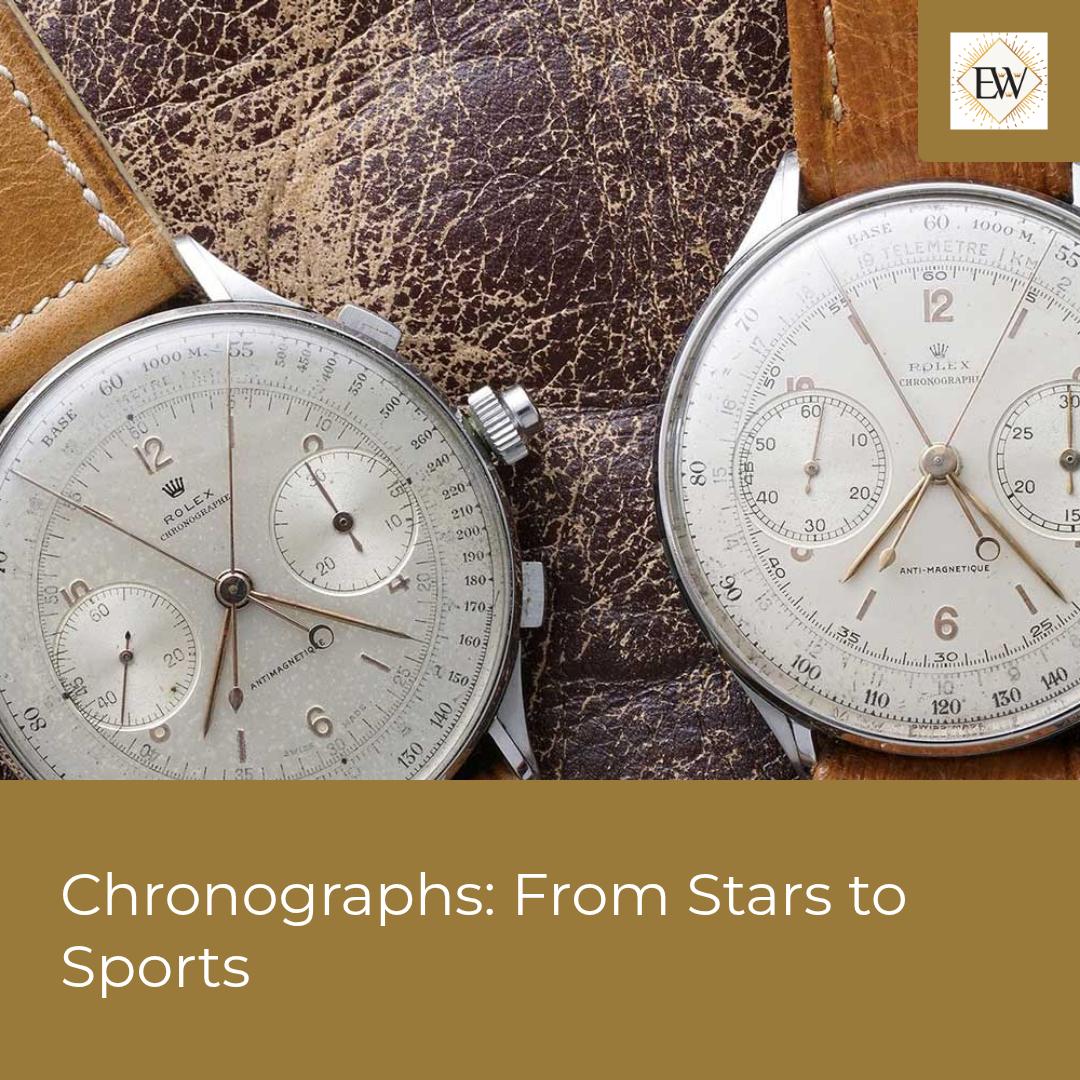
A selection of vintage mono-pusher chronograph watches from the Experts Watches collection — illustrating the variety of single-pusher complications available to collectors. Browse our collection.
❓ Frequently Asked Questions
What watch did Amelia Earhart wear on her trans-Atlantic flights?
Amelia Earhart wore a Longines Mono-Pusher Chronograph with two registers on both of her trans-Atlantic flights — one as a passenger aboard the Fokker Trimotor Friendship in 1928, and one as a solo pilot in 1932.
Where is Amelia Earhart’s watch today?
After being flown to the International Space Station in 2010 by astronaut Shannon Walker, the watch was placed on display at The Ninety-Nines Museum of Women Pilots in Oklahoma City.
Where is the Fokker Trimotor Friendship today?
The Friendship — the plane aboard which Earhart made her 1928 trans-Atlantic passenger flight — is preserved at the Lyon Air Museum in Santa Ana, California, as of 2025.
Who is H.G.S.Jr on the watch inscription?
H.G.S.Jr refers to H. Gordon Selfridge Jr., owner of the famed London department store. Earhart gave him the watch after her 1932 Atlantic crossing. The exchange is documented in George Palmer Putnam’s book Soaring Wings.
What is The Ninety-Nines?
The Ninety-Nines is an international organization of licensed women pilots, founded in 1929. Amelia Earhart was a charter member and its first president. The organization has more than 5,500 members from 35 countries. Astronaut Shannon Walker is also a member.
What is a mono-pusher chronograph?
A mono-pusher chronograph uses a single pusher to start, stop, and reset the chronograph function in sequence. One press starts the timer, a second stops it, and a third resets it — all from a single crown-side pusher. It is a mechanically demanding and historically significant complication, particularly associated with aviation and precision timing in the early 20th century.
📚 Related Guides at Experts Watches:
• Vintage Longines Collection — browse our curated selection of vintage Longines watches.
• Watch Movements That Changed The World — the calibers that defined an era.
• Vintage Watch Care & Maintenance Guide — how to care for your mechanical watch.
• Certified Pre-Owned Program — every watch inspected, timed, and authenticated in-house.
• Sell or Trade Your Watch — fair appraisals from our expert team.

All information on this page is provided for educational and collector reference purposes only. Experts Watches is not affiliated with The Ninety-Nines or any aviation organization.
Watch Gallery
Connecting Collectors with Iconic Timepieces Since 2000

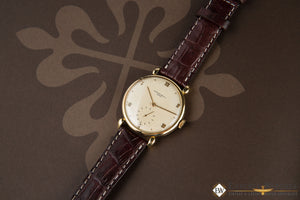
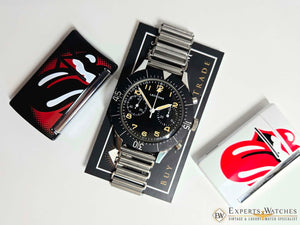
Our collections


Testimonials
Could Not Ask For Better Service! Shipping was unbelievably quick! Awesomeness at its finest!
Highly Recommend!! I'm over satisfied! ExpertsWatches is awesome! So legit!
Very professional! Holy Crap that was fast!👍🏽🤣👍🏽
Michael I.
JAEGER LeCOULTRE Master Compressor Titanium Diving PROGeographic GMT
Our Latest Thoughts

Seiko Tensoku: The Rarest WWII Japanese Military Pilot Watch
Read more
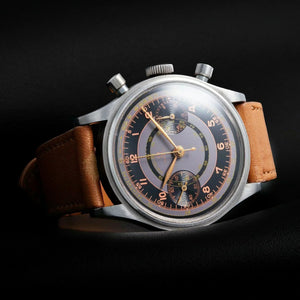
Vintage Omega Chronograph Prices UP
Read more

Top Watch Brands with Ownership and Revenue 2025
Read more